


The self-developed G3.3.3 High Efficiency Air-side System Simulator (the “G3 Simulator”) provides an intuitive way to understand VAV (Variable Air Volume) systems in HVAC training.
It fully replicates the complete air-side system control logic—from supply air, temperature and humidity control, and outdoor air control to seasonal changeover. This article will break down the core operating sequence in a single, clear overview.
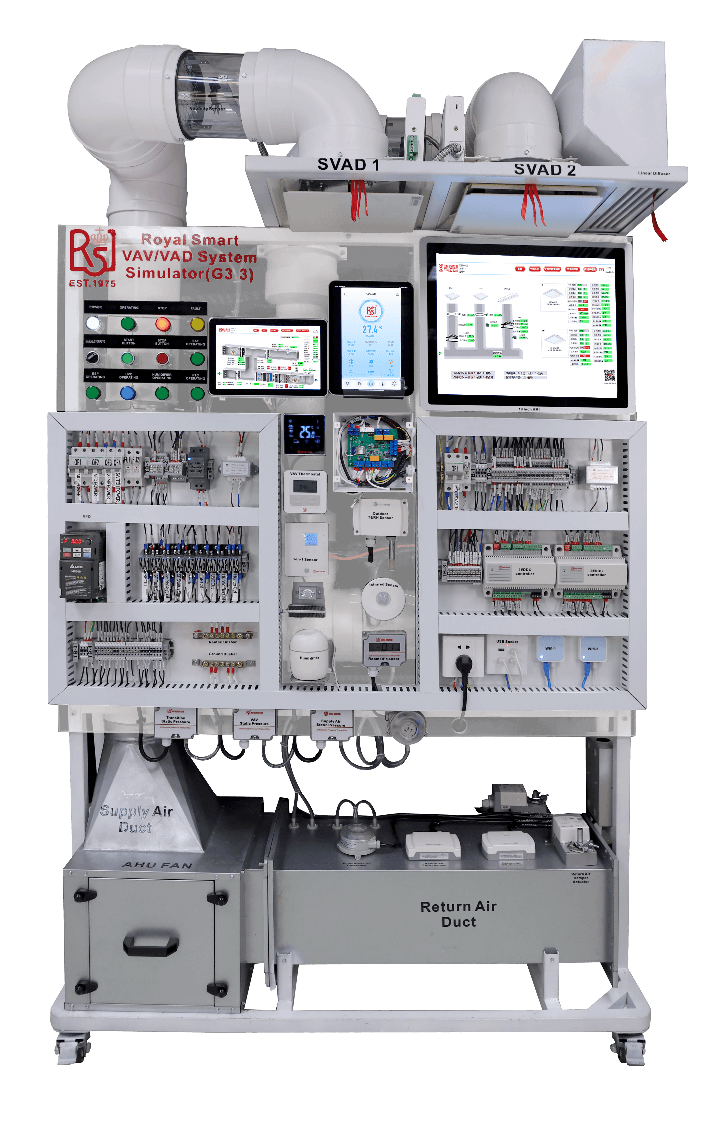
1.Variable Frequency Fan Control (Constant Static Pressure Control)
The G3 Simulator adopts a constant static pressure control strategy:
The system continuously monitors the static pressure at the main supply air duct and automatically adjusts the fan speed (frequency) to maintain the supply air static pressure at the setpoint. This ensures stable terminal airflow and efficient system operation.
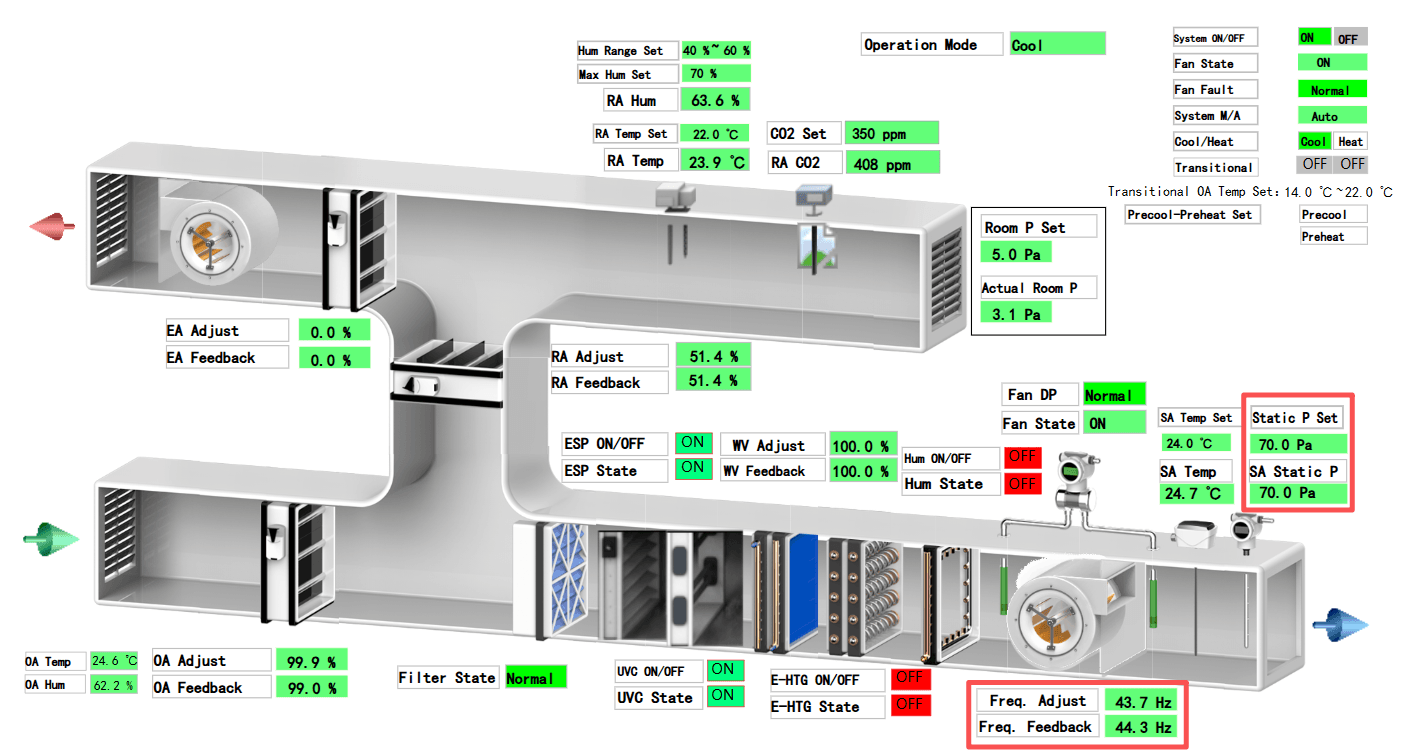
2.Indoor CO₂ Concentration Control (Cooling / Heating Mode)
In standard cooling and heating modes, the system regulates outdoor air intake based on CO₂ concentration:
(1).The outdoor air damper position is automatically adjusted to maintain the return air CO₂ level close to the setpoint.
(2).The outdoor air damper and return air damper operate in a 2:1 inverse proportional linkage.
Example: Outdoor air damper at 100% → Return air damper = 1 − 100% / 2 = 50%
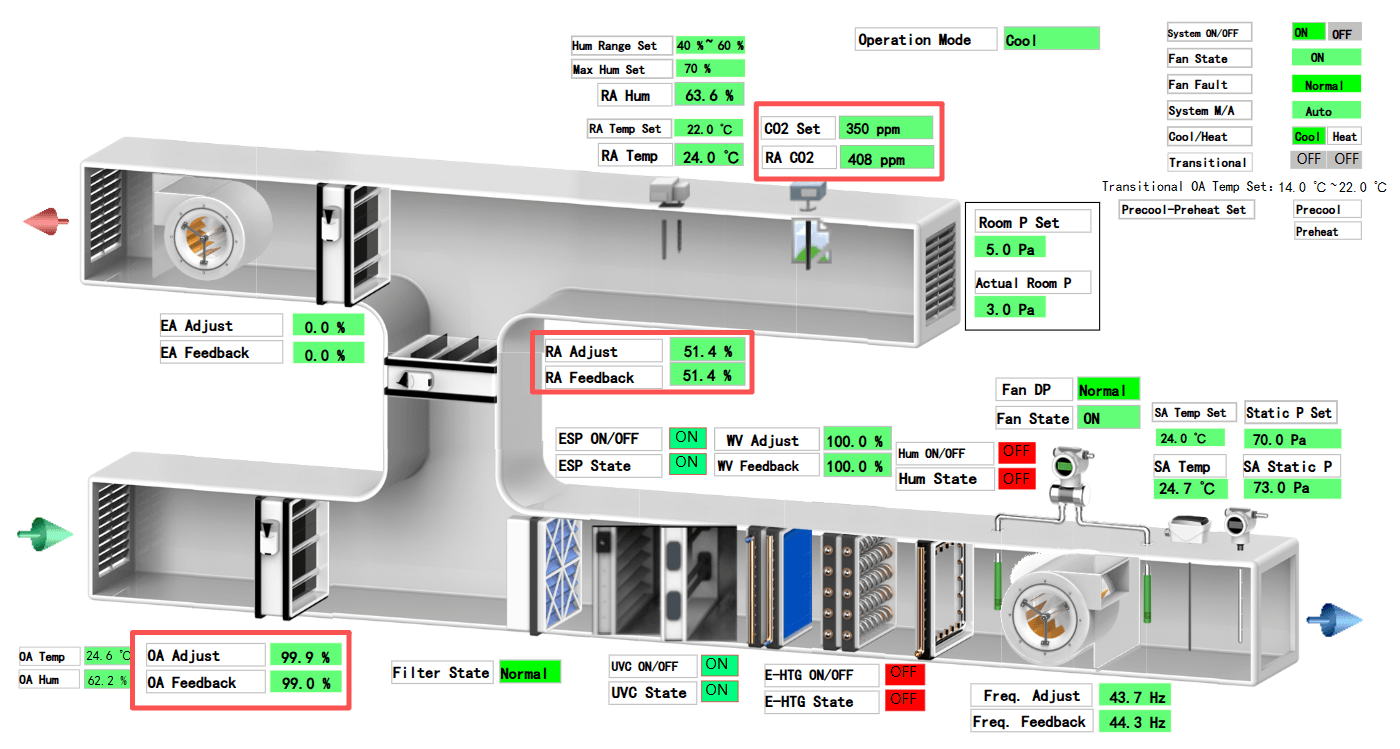
3.Cooling Mode: Chilled Water Valve Control
During cooling operation, the system precisely maintains the supply air temperature at its setpoint by modulating the chilled water valve opening, ensuring stable and consistent indoor cooling performance.
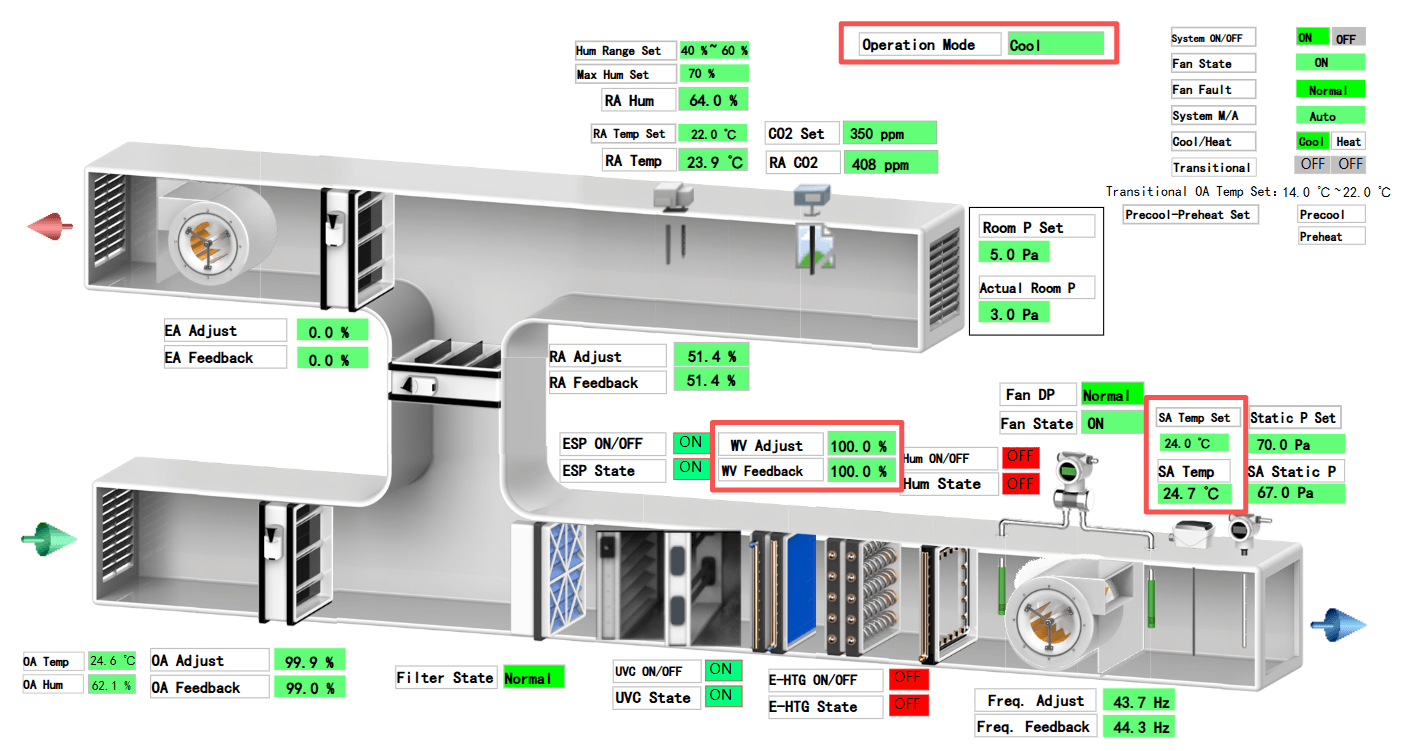
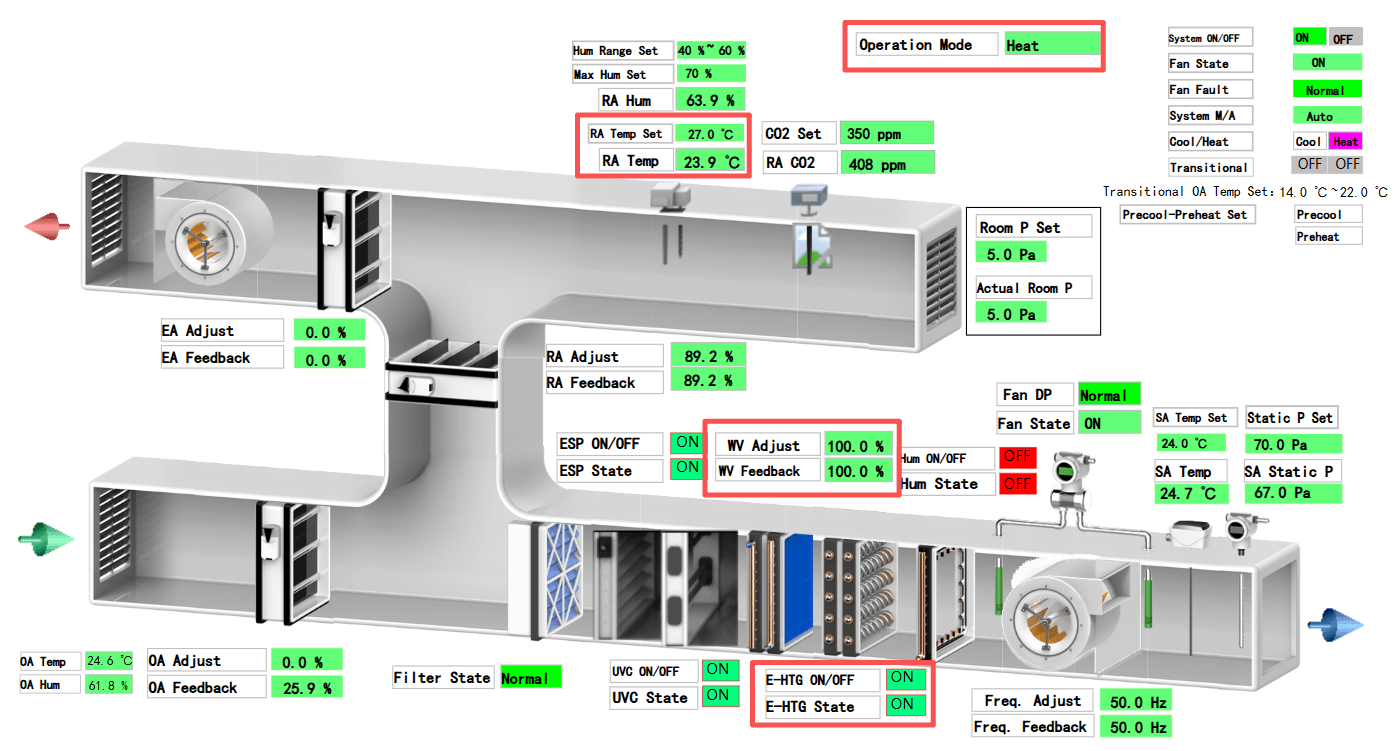
4.Heating Mode: Hot Water Valve & Electric Reheat Control
The heating strategy adopts a hot water valve priority with electric reheating as auxiliary control:
(1).The hot water valve opening is adjusted first to maintain the return air temperature at the setpoint.
(2).If the hot water valve is fully open and the return air temperature is still 1°C below the setpoint, the electric heater is automatically activated for supplemental heating.
5.Dehumidification Control (Cooling Dehumidification Mode)
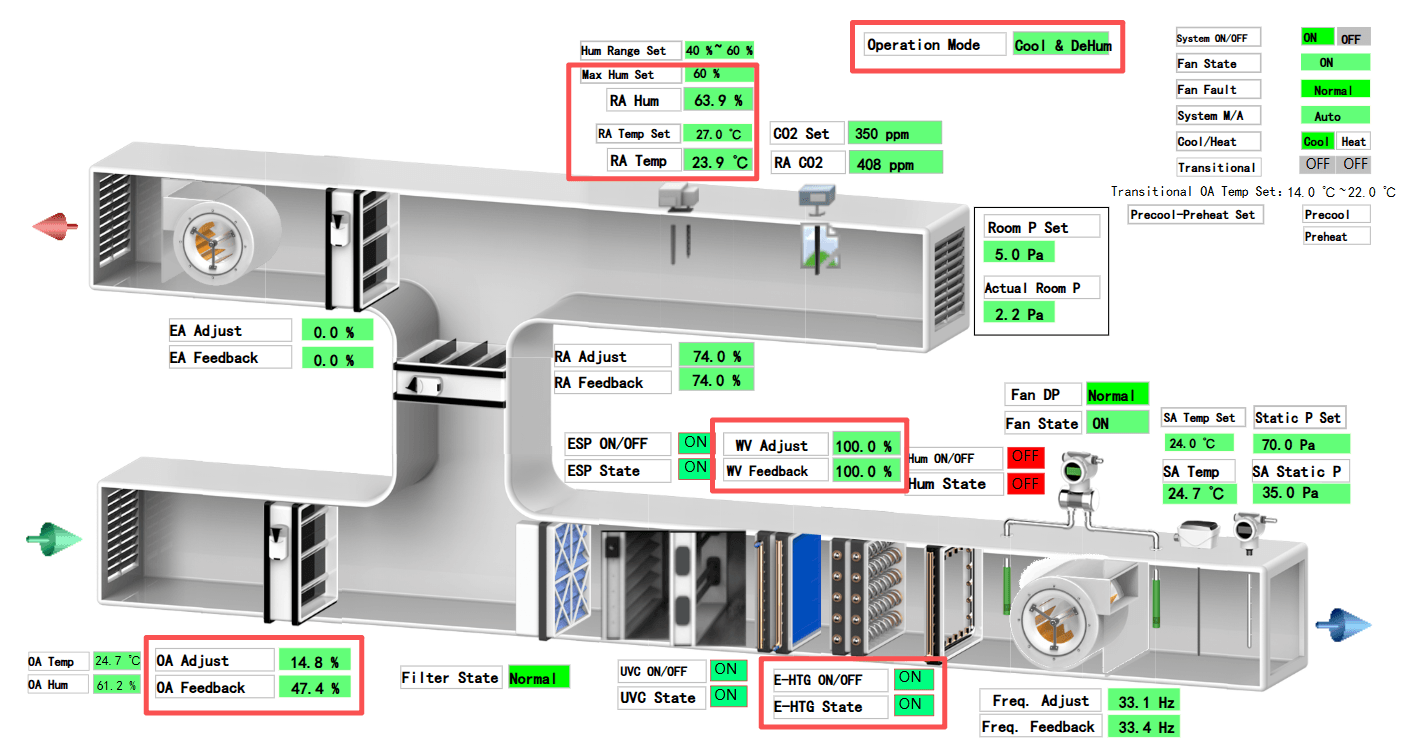
In cooling mode, when the return air relative humidity exceeds the maximum setpoint, the system automatically switches to dehumidification mode:
(1).The chilled water valve is fully opened to enhance dehumidification.
(2).The outdoor air damper is maintained at a minimum position (e.g., 15%).
(3).When the return air temperature drops 3°C below the setpoint, electric reheating is activated to prevent overcooling.
6.Humidification Control (Heating Mode)
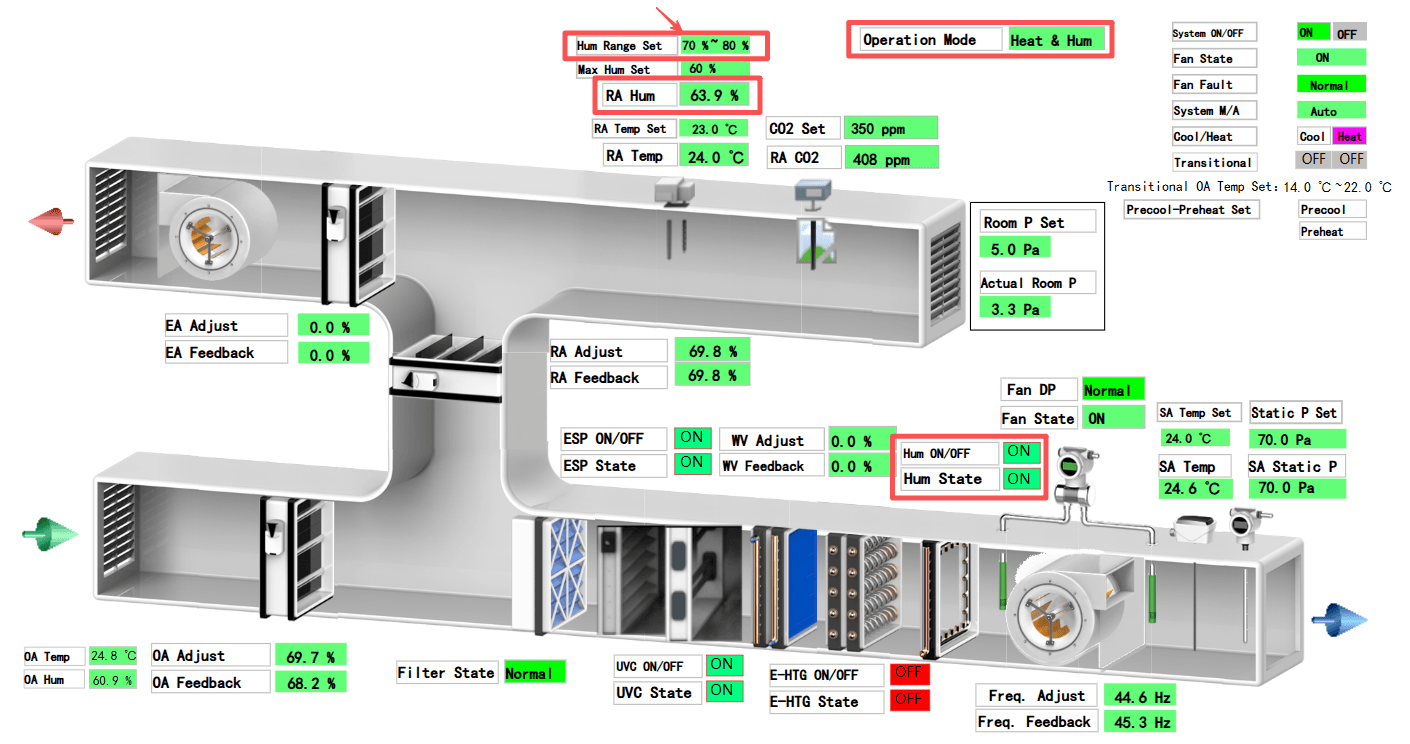
During heating operation, when the return air relative humidity falls below the minimum setpoint, the system automatically opens the humidifier water valve to increase indoor humidity to a comfortable range.
7.Transitional Season Control (14°C–22°C)
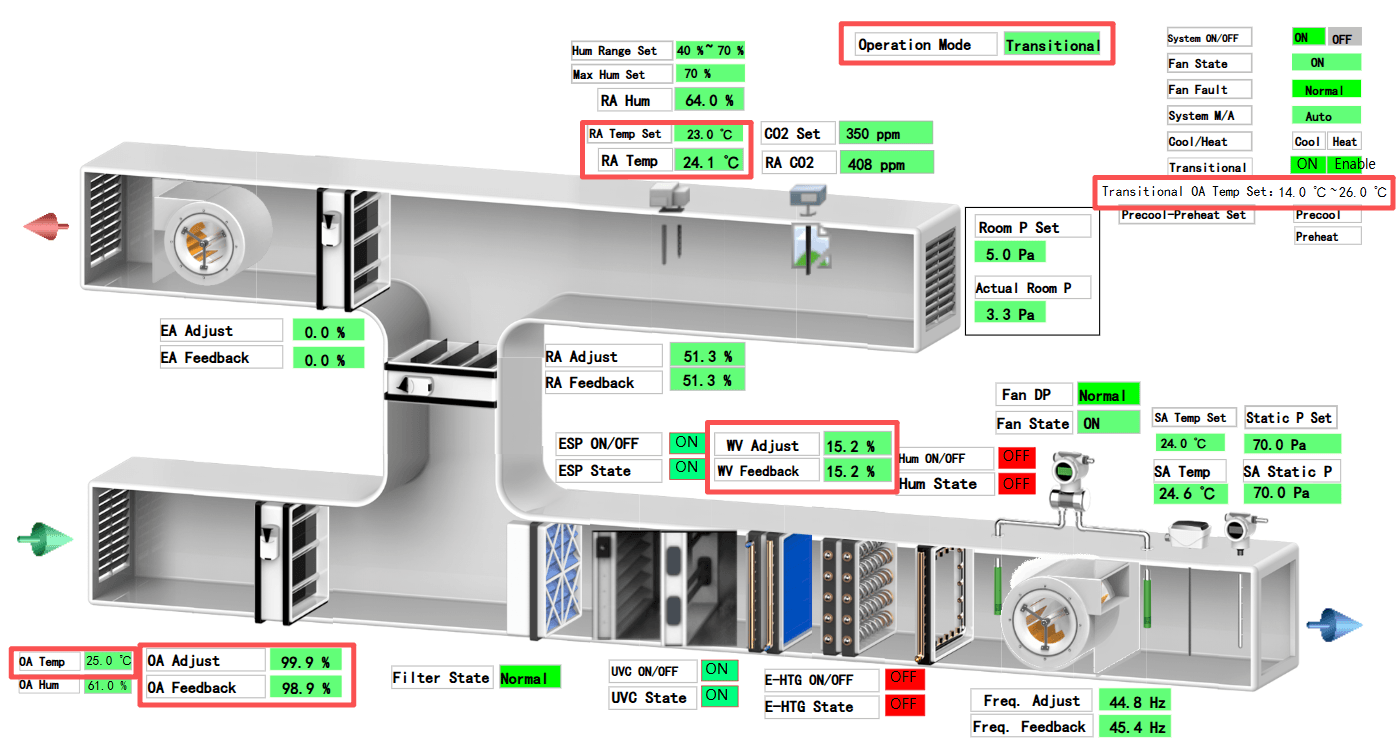
When outdoor temperature ranges between 14°C and 22°C, the system automatically switches to transitional energy-saving mode:
(1).The outdoor air damper is fully open.
(2).The system operates on 100% outdoor air supply, with the chilled water valve modulating to maintain the return air temperature at the setpoint.
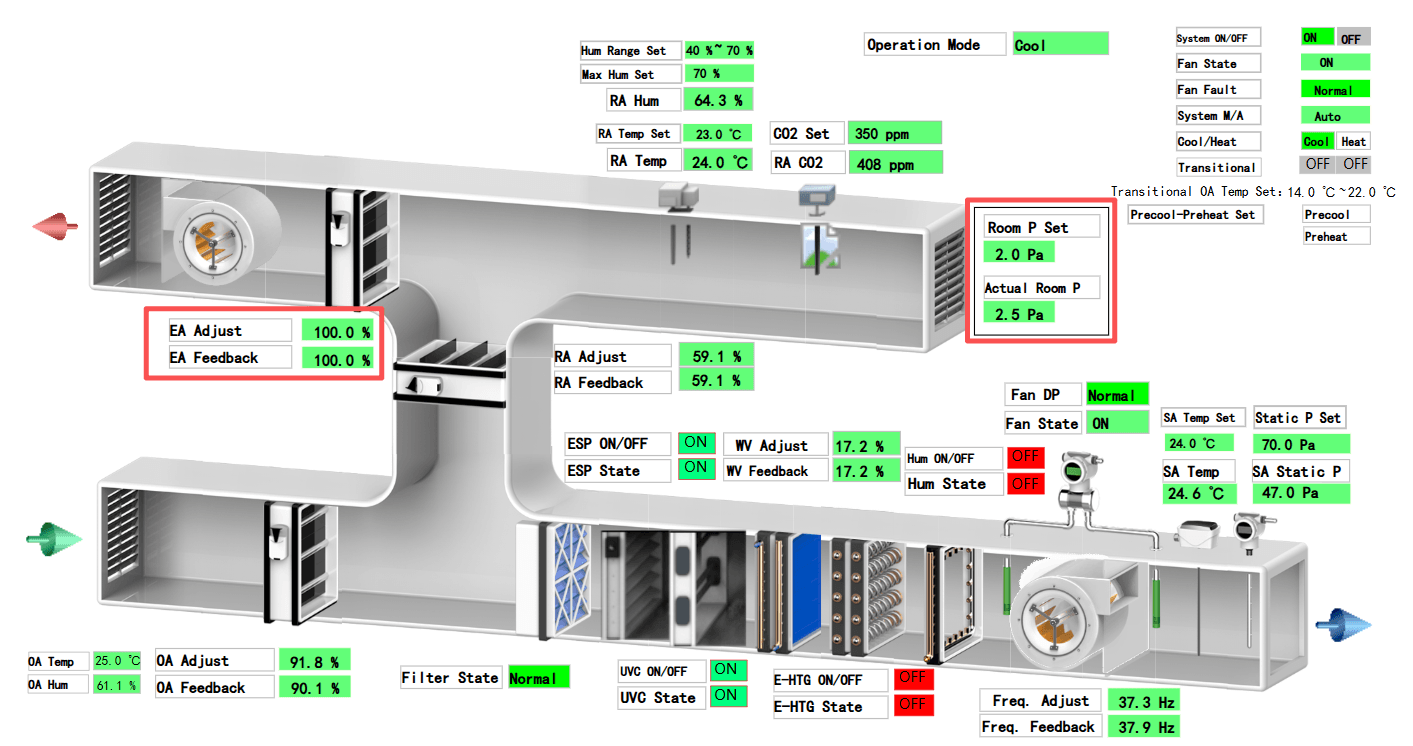
8.Indoor Positive Pressure Control
The system maintains stable indoor positive pressure in real time by modulating the exhaust air damper position, ensuring indoor air quality and pressure balance.
9.Pre-Cooling Control Logic
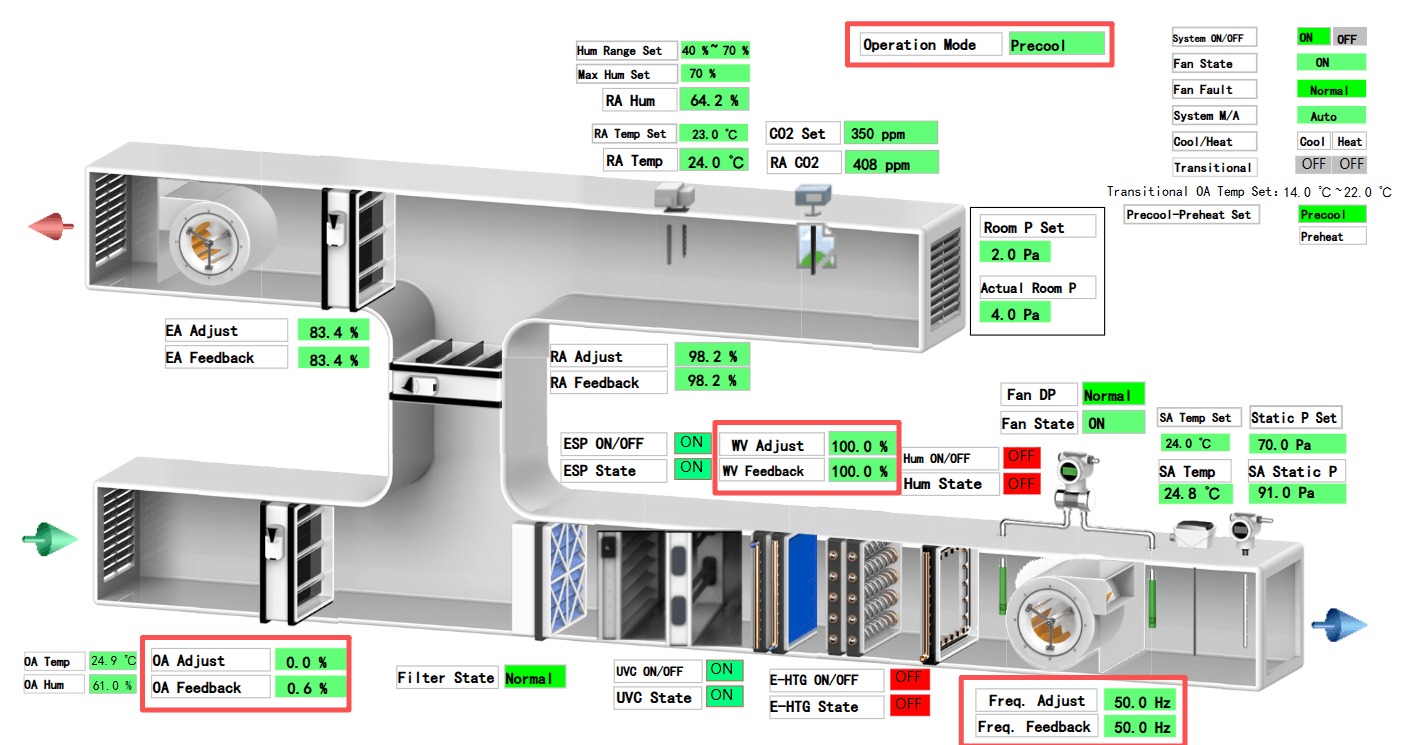
The pre-cooling mode enables rapid temperature pull-down under two operating conditions:
(1).When outdoor temperature is 2°C lower than return air temperature: outdoor air damper fully open + fan at 50 Hz + chilled water valve fully open.
(2).When outdoor temperature is not 2°C lower than return air temperature: outdoor air damper fully closed + fan at 50 Hz + chilled water valve fully open.
(3).Once the target temperature is reached or the timer ends, the system automatically switches back to standard cooling mode.
10.Pre-Heating Control Logic
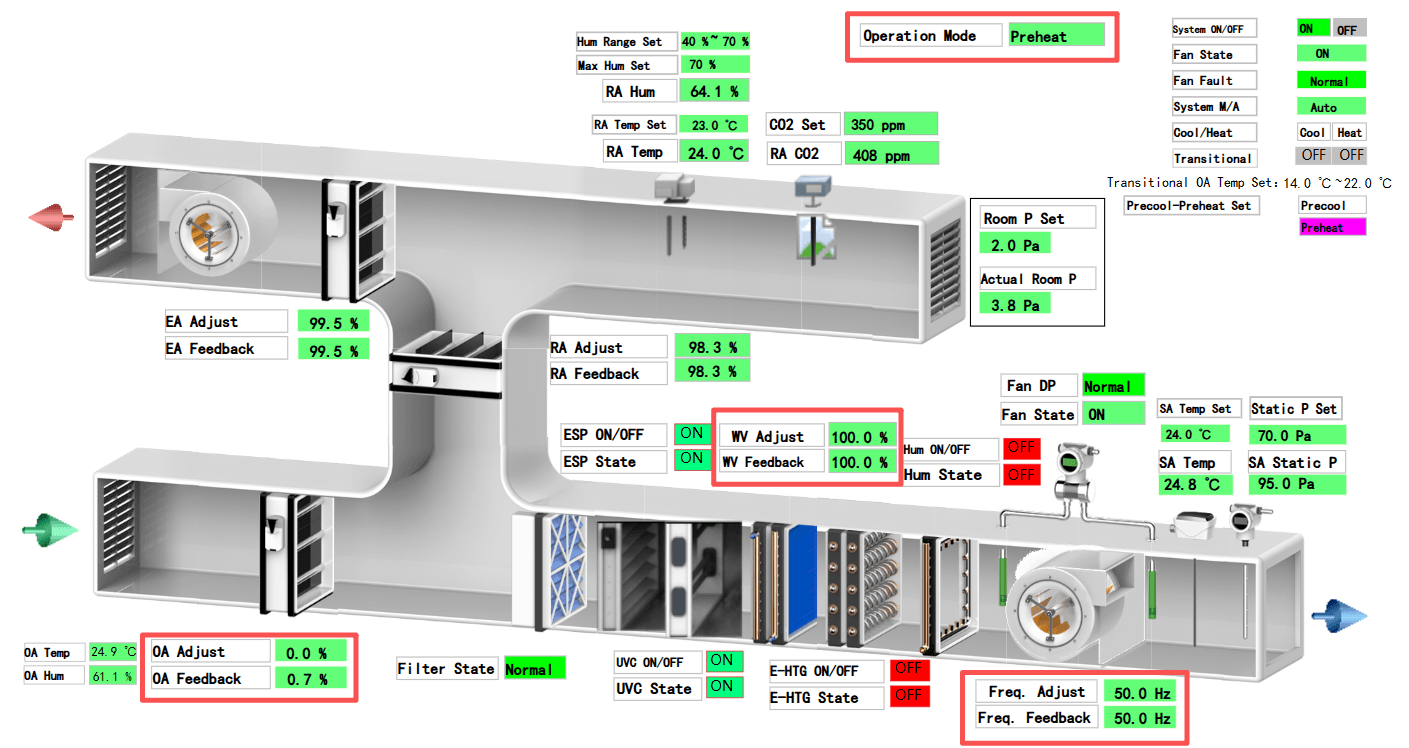
The pre-heating mode enables rapid temperature rise:
(1).Outdoor air damper fully closed + fan at 50 Hz + hot water valve fully open.
(2).Once the target temperature is reached or the timer ends, the system automatically switches back to standard heating mode.
Through the G3.3.3 high-efficiency air-side system simulator, we can gain a more intuitive understanding of the core operating logic of VAV systems.
Looking ahead, air-side systems will continue to evolve toward smarter control, higher energy efficiency, and greater precision. Follow us for more HVAC insights and technical expertise.

